Autumn Indoor Sports to Enjoy as Summer Ends

The evenings are drawing in, the parks are damp by tea time, and that easy summer habit of “just popping out” for a game starts to fade. Autumn changes the rhythm of the week. It also opens the door to a different kind of sport, one with bright lights, dry floors, warm cafés, and a good reason to leave the house when the weather turns.
Indoor sports are at their best in autumn. Table tennis, badminton, squash, snooker, pool, and darts all offer something useful: they keep you active, sharpen your focus, and give you a regular social hour without needing a dry pitch or a sunny evening.
Better still, most of them are easy to start. You do not need to be especially fit, own expensive kit, or commit to a full team season. A spare hour, a friend or two, and a local leisure centre, club, pub, or snooker hall can be enough.

Why autumn is the perfect time to move indoors
Summer sport often has a loose, spontaneous feel. A kickabout in the park, tennis after work, a long walk, or a quick cycle while it is still light. Autumn asks for a bit more planning. That can be a good thing.
Booking a court or table gives structure to the week. It creates a simple routine at a time of year when many people become less active. Darker evenings can make it tempting to stay in, especially once the weather turns wet and windy. A regular indoor game gives you a reason to move without fighting the forecast.
There is also a social benefit. Indoor sports tend to be compact and sociable. You are not spread across a huge field. You can chat between games, swap partners, play short rounds, and stop for a drink afterwards. That makes them ideal for friends, families, work groups, and anyone trying to keep a bit of fun in the colder months.
Another advantage is variety. You can pick a sport to match your mood and energy level.
If you want... | Try... |
A fast workout | Squash or badminton |
Quick reactions without too much running | Table tennis |
A relaxed social evening | Pool, snooker, or darts |
A mix of skill and movement | Badminton or table tennis |
A sport you can enjoy at almost any age | Darts, pool, snooker, or table tennis |
That range matters. Not every autumn evening calls for a high-intensity match. Some nights, a few frames of pool or a game of darts are exactly right. Other nights, squash can give you that proper “I have done something” feeling in under an hour.
Table tennis, badminton, and squash bring speed indoors
Some indoor sports are all about fast movement, timing, and quick decisions. Table tennis, badminton, and squash sit firmly in that camp. They are great choices if you want to stay active through autumn without feeling trapped on a treadmill.
Table tennis is quick to learn and hard to master
Table tennis is one of the easiest indoor sports to try. The rules are simple enough for a beginner to pick up quickly, but the skill ceiling is high. Spin, placement, footwork, and reaction speed all become more interesting as you play more often.
It also works well for mixed ability groups. A stronger player can ease off the power and practise control. A beginner can still enjoy rallies without needing huge amounts of space or stamina. That makes table tennis a good option for families, casual clubs, and lunch-break leagues.
A few simple tips help early on:
Keep the bat relaxed in your hand.
Watch the ball right onto the bat.
Aim for the table before trying to win the point.
Learn to serve consistently before adding spin.
The best thing about table tennis is how quickly it becomes absorbing. A rally can last only seconds, but each point gives you a fresh chance to adjust.

Badminton suits both casual rallies and serious games
Badminton is often underestimated until someone plays it properly. At a gentle pace, it is accessible and friendly. At a higher pace, it becomes one of the quickest racket sports around, with sharp lunges, fast smashes, and clever changes of direction.
For autumn, badminton has a lot going for it. Courts are widely available in leisure centres across the UK, equipment is affordable, and doubles allows four people to share one court. It is also less intimidating than some sports because a casual knock-up can be fun from the start.
A good beginner focus is length. Try to hit the shuttle high and deep to the back of the court. That gives you time to recover and stops every rally becoming a scramble at the net.
Badminton also works well as a weekly habit. A one-hour court booking can include warm-up rallies, a few doubles games, and enough movement to feel valuable without taking over the evening.
Squash offers a serious workout in a small space
Squash is compact, intense, and satisfying. The court is small, but the movement can be demanding. Short sprints, turns, lunges, and changes of pace all add up quickly.
It is a strong choice for anyone who wants an efficient indoor workout. You can play a full session in less time than many outdoor sports require, and there is no waiting for a team to turn up. One opponent, one court, two rackets, and a ball are enough.
Beginners should start slowly. Squash rewards control more than wild power. Hitting the ball as hard as possible often makes rallies shorter and more chaotic. Aim for steady length down the side walls, give your opponent space, and take care when turning. Safety and court awareness matter because both players share the same area.
Squash can feel tough at first, but improvement comes quickly. Once you start reading the bounce off the walls, the game becomes much more enjoyable.
Snooker, pool, and darts make autumn evenings social
Not every sport has to leave you out of breath. Snooker, pool, and darts offer a different kind of challenge. They are slower, more tactical, and often more social. That makes them perfect for darker evenings when you want to get out, concentrate, and enjoy good company.
Snooker rewards patience and precision
Snooker has a calm rhythm. It asks for focus, cue control, and planning. The table is large, the pockets are tight, and the game can punish rushed shots. That is part of its appeal.
For beginners, snooker can feel difficult at first. The distance, angles, and pace of the cloth all take time to understand. Start with simple goals. Pot a red, hold position, and avoid leaving an easy chance. Do not worry too much about big breaks early on.
Snooker is an excellent autumn sport because it encourages patience. It slows the evening down. A frame with a friend can become a relaxed ritual, especially when the weather outside is miserable.
Pool is easy to enjoy with friends
Pool is more forgiving than snooker, which makes it ideal for mixed groups. The table is smaller, the pockets are wider, and games move quickly. You can play singles, doubles, or winner-stays-on if a few people are waiting.
It is also one of the easiest indoor sports to fit into an evening. Many pubs, clubs, and leisure venues have tables, so you do not always need a formal booking.
Good pool is still full of skill. Position matters. Shot choice matters. A calm safety shot can be smarter than a risky pot. Beginners often improve fastest when they stop trying to pot everything and start thinking one shot ahead.
A useful habit is to walk around the table before playing. Seeing the angle from both sides helps you choose the right shot and avoid careless misses.
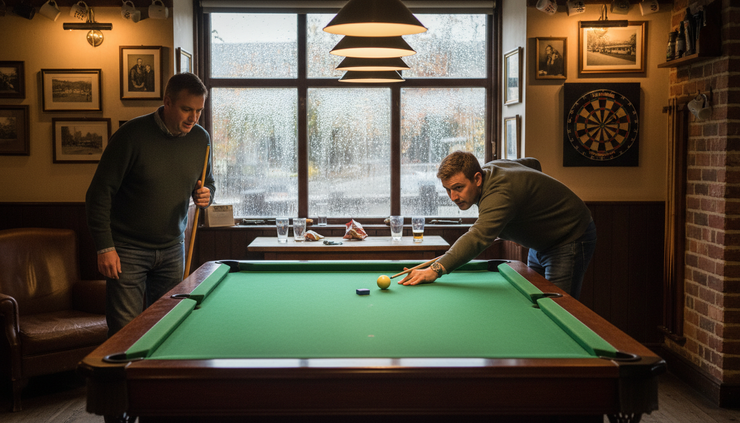
Darts is simple, affordable, and surprisingly gripping
Darts needs very little space compared with most sports, but it can create plenty of tension. A leg of 501 can swing quickly. One good visit changes the mood, and a missed double can keep everyone watching.
The appeal lies in its simplicity. Learn the throwing distance, keep a steady stance, and aim for repeatable movement. You do not need strength. You need rhythm.
For casual players, darts works best when the format suits the group. Try 301 instead of 501 for shorter games, or play around the clock to practise every number on the board. Doubles games are good for larger groups because they keep more people involved.
It is also a sport where small improvements feel rewarding. Hitting the board more consistently, grouping darts closer together, and finally finishing on a double can all feel like proper milestones.
How to choose the right indoor sport this autumn
The best indoor sport is the one you will actually play again next week. That sounds obvious, but it is easy to pick something too intense, too expensive, or too awkward to organise.
Start with your reason for playing.
If fitness is the goal, badminton and squash are strong choices. Table tennis can also be active, especially in longer rallies, but it is easier to control the pace.
If social time matters most, pool and darts are hard to beat. They suit relaxed evenings and do not require everyone to be at the same ability level.
If skill and concentration appeal, snooker offers depth. It can be frustrating, but that challenge is what keeps many players coming back.
Think about practical details too:
Location Choose somewhere easy to reach on dark evenings.
Cost Court hire, table time, and equipment vary. Sharing with others can keep it reasonable.
Group size Squash needs two players. Badminton can suit two or four. Pool and darts can handle a small group more easily.
Noise and atmosphere A leisure centre feels very different from a pub games room or snooker club.
Physical demand Pick something that matches your current fitness, not the fitness you hope to have by Christmas.
It can help to rotate sports for a few weeks. Play badminton one week, pool the next, then try table tennis. Autumn is long enough to experiment before settling into a favourite.
Make it a habit before winter sets in
Indoor sport works best when it becomes part of the week rather than a one-off plan. The trick is to make it easy.
Book the same slot each week if you can. Keep basic kit ready by the door. Say yes to shorter sessions, because a 45-minute game is better than waiting for the perfect free evening. If friends are involved, keep the group small enough that organising does not become a chore.
A little routine also improves the experience. Warm up for racket sports. Stretch gently after squash or badminton. For cue sports and darts, take a few practice shots or throws before keeping score. These small habits make play feel better and lower the chance of avoidable aches.
There is no need to turn autumn sport into a serious training plan. The real value is consistency. A weekly game gives shape to darker months, keeps skills ticking over, and adds something enjoyable to look forward to.

A season for skill, focus, and good company
Summer ending does not have to mean sport stops. It simply changes setting. Grass gives way to courts, tables, boards, cues, and racquets. The pace changes too. Some nights call for the speed of squash or badminton. Others suit the calm focus of snooker, the easy flow of pool, or the quiet pressure of a double in darts.
The best autumn indoor sports are the ones that fit your week and make you want to come back. Start with what feels fun, keep the arrangements simple, and let the habit build.
By the time winter arrives, that weekly indoor game may be the thing that keeps the season feeling bright.
Comments